 Wellness Review Labs
 By
By 
When estrogen levels drop during perimenopause and menopause, skin changes can feel surprisingly swift. Many women notice increased dryness, a loss of plumpness, and a duller complexion within just a few years. Because estrogen receptors are heavily concentrated in skin tissue, researchers have long studied whether replacing those declining hormones can restore youthful skin. Understanding the biological mechanisms behind these changes helps set realistic expectations for what medical treatments and lifestyle adjustments can actually achieve.
The transition through midlife involves complex shifts across the entire endocrine system. As the ovaries gradually produce less estrogen and progesterone, the physiological effects ripple outward. The skin, being the largest organ in the human body, is particularly sensitive to these internal fluctuations. For decades, dermatologists and endocrinologists have tracked how the sudden withdrawal of a hormone that once stimulated cellular renewal and moisture retention alters the physical architecture of the dermis.
What Happens to Your Skin When Estrogen Declines
To understand why people look to HRT for aging skin, it helps to look at what estrogen actually does on a microscopic level. During the first five years of menopause, women lose an estimated 30 percent of their skin's collagen. After that initial rapid decline, the loss continues at a steady rate of about one to two percent each year. This is not just a cosmetic concern; it represents a fundamental shift in connective tissue stability.
Collagen is the primary structural protein responsible for keeping skin firm, bouncy, and resilient against daily mechanical stress. Elastin, which allows skin to snap back into place after smiling or frowning, also degrades more rapidly as estrogen dips. Beyond structural proteins, estrogen helps skin retain moisture by supporting natural hyaluronic acid production within the extracellular matrix. When estrogen falls, skin barrier function weakens significantly, leading to chronic dryness, greater environmental sensitivity, and a much more pronounced appearance of fine lines across the face, neck, and hands.
Furthermore, cutaneous blood flow often decreases post-menopause. This means fewer vital nutrients and oxygen molecules are delivered directly to skin cells, slowing down natural cellular turnover and repair processes. The result is a complexion that may appear tired, uneven, or lacking its previous luminosity, even when using familiar skincare products that previously worked wonders.
Can HRT Actually Reverse Skin Aging?
The word 'reverse' is tricky when discussing medical interventions. Dermatological research shows that systemic hormone replacement therapy can significantly improve several markers of skin health. Studies published in reputable dermatology journals note that women using systemic HRT often demonstrate increased dermal thickness, better moisture retention levels, and higher overall collagen content compared to non-users of the exact same age group.
However, it is vital to be realistic: HRT is not a magic eraser. It cannot undo years of accumulated ultraviolet sun damage from decades past, nor can it eliminate deep expression lines or structural sagging that has already occurred due to gravity, facial fat redistribution, and underlying bone resorption. Think of HRT as a way to alter the trajectory of future skin aging and protect your current dermal matrix, rather than acting as a time machine for existing wrinkles that have already formed.
Hormone therapy can help preserve the dermal matrix and slow down the visible decline in skin thickness during early menopause, but it works best as a protective measure rather than a complete remedy for past damage.— Practicing Dermatologist, American Academy of Dermatology Member
Furthermore, deciding to start hormone replacement therapy involves weighing numerous systemic health factors—such as cardiovascular history, breast cancer risk, and symptom severity—under the guidance of a qualified physician. Skin improvement is rarely the sole medical justification for prescribing systemic hormones, even though it remains a welcome secondary benefit for many women navigating the transition.
Everyday Habits That Support Aging Skin
Whether or not you choose to explore hormone replacement therapy with your healthcare provider, daily behavioral habits have a tremendously powerful influence on how your skin ages through your fifties, sixties, and beyond. Consistency in basic care often outperforms expensive, short-lived cosmetic fixes.
- Prioritize broad-spectrum SPF every single morning, even on overcast or cloudy days, to prevent further UV-induced collagen breakdown.
- Incorporate gentle, non-foaming, hydrating cleansers that protect your compromised lipid barrier rather than stripping away natural oils.
- Support your body's structural proteins from the inside out with adequate daily dietary protein, vitamin C, and systemic hydration.
- Consider targeted nutritional support if your daily diet lacks specific building blocks required for hair, skin, and nail maintenance.
Building these small, sustainable habits creates a protective buffer against environmental stressors like pollution and dry indoor heating, both of which accelerate moisture loss in mature skin. Protecting the skin barrier allows whatever topical products you use to perform with maximum efficiency.
Nutritional Support When Skin Needs Extra Care
As skin changes during midlife, topical moisturizers and expensive creams often feel like they are simply sitting on the surface without penetrating deeply. That frustrating sensation happens because the underlying support matrix needs nourishment from within, where blood vessels supply developing cells with raw materials.
While no dietary supplement can replace the powerful systemic effects of hormones, targeted formulas can provide the specific amino acids, vitamins, and cofactors your body naturally utilizes to maintain healthy skin tissue, strong nails, and resilient hair follicles.
This is precisely where supporting formulas come into practical play. For readers looking for an everyday nutritional routine that goes far beyond basic multivitamins, we evaluate options like Crowned — a hair, skin, and nail support formula designed to promote everyday vitality from the inside out. Starting at $19.99 a bottle and backed by a reassuring 90-day money-back guarantee, it provides a straightforward way to supply your beauty routine with foundational nutrients. It will not alter your hormone levels or erase deep structural wrinkles, but it is carefully formulated to help support the structural integrity of your skin, hair, and nails as you gracefully navigate life's hormonal transitions.
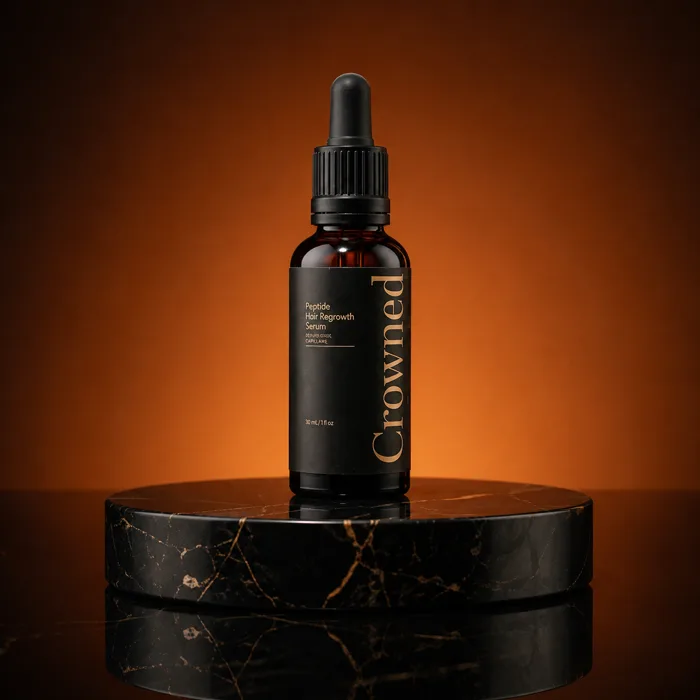
Crowned provides targeted nutritional support for hair, skin, and nails to help maintain everyday vitality when hormonal shifts impact structural proteins.
- Buy 3, Get 3 Free — Lowest Price Ever$19.99/bottle
- Buy 2, Get 2 Free — Most Popular$27.49/bottle
- Buy 1, Get 1 Free$44.75/bottle
We may earn a commission at no extra cost to you.