 Wellness Review Labs
 By
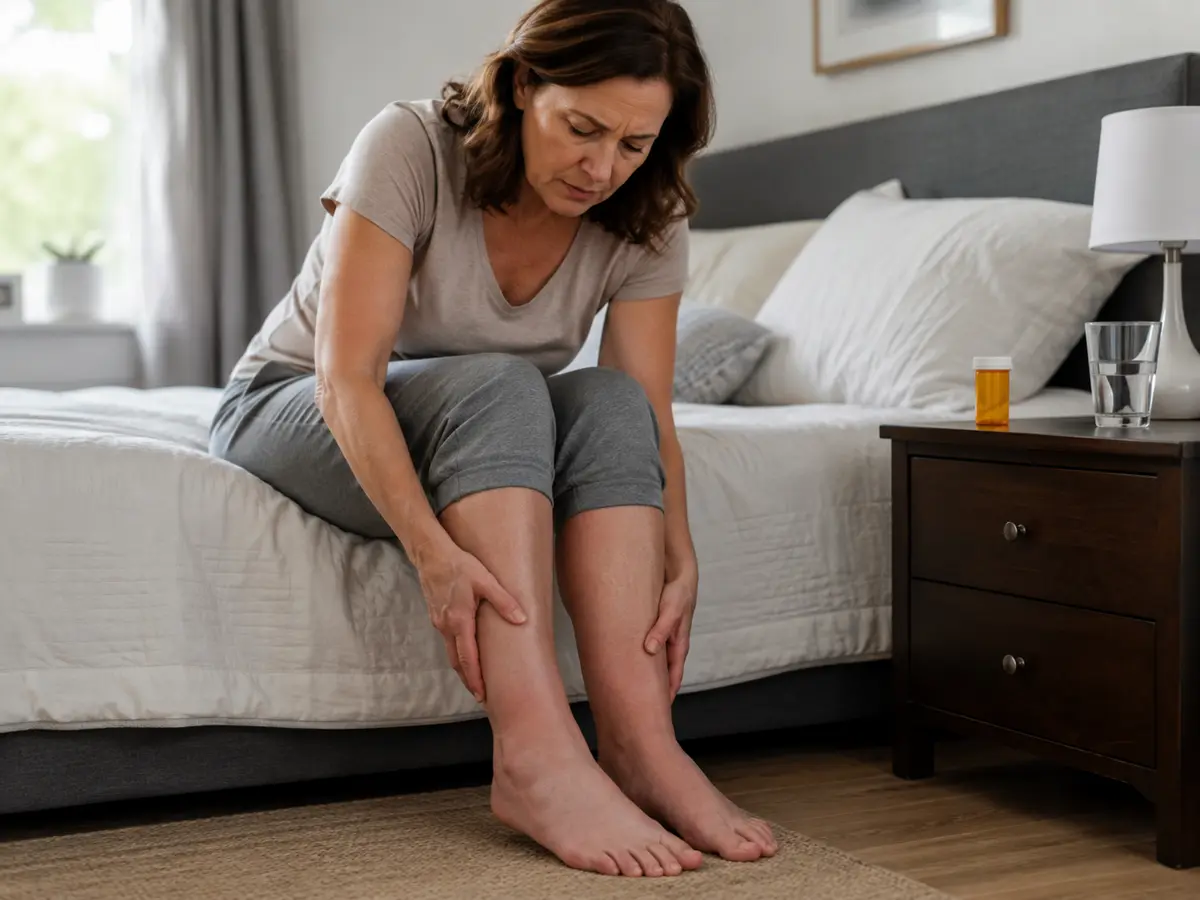
Swollen feet, clinically referred to as peripheral edema, occur when excess fluid becomes trapped within the tissues of your feet, ankles, and lower legs. The fundamental question—what is swollen feet a sign of—comes down to fluid dynamics. In a balanced system, your heart pumps blood down through your arteries, and your veins and lymphatic vessels transport that fluid back up against gravity. When that return system slows down or encounters resistance, fluid pools at the lowest point of your body.
Everyday Causes: Why Fluid Pools in the Lower Legs
For most adults over 45, intermittent swelling is not a sign of organ failure. Rather, it reflects everyday mechanical strain on the circulatory and lymphatic networks. Over time, the tiny one-way valves inside your veins can stretch and weaken, allowing fluid to leak into the surrounding soft tissue.
Common non-emergency triggers include:
- Prolonged sitting or standing: Without the natural pumping action of your calf muscles, blood and lymph pool in the feet.
- High dietary sodium: Excess salt prompts the kidneys to hold onto water, expanding total fluid volume.
- Hot weather: Blood vessels naturally dilate to release heat, which allows fluid to migrate into nearby tissues more easily.
- Common medications: Certain blood pressure drugs (especially calcium channel blockers), nonsteroidal anti-inflammatory drugs (NSAIDs), and hormone therapies frequently produce mild fluid retention.
- Overweight or physical inactivity: Extra pressure on the pelvic veins and reduced muscular movement slow vascular return.
The Overlooked Role of the Lymphatic System
While most people immediately think of veins when discussing circulation, the lymphatic system plays an equally critical role in keeping your feet their normal size. Blood capillaries naturally leak a small amount of fluid and protein into tissues every day. Your veins reabsorb about 85 to 90 percent of this fluid, but the remaining fluid and larger protein molecules rely entirely on lymphatic vessels for clearance.
If your lymphatic channels become overwhelmed or sluggish, that protein-rich fluid lingers. Over time, persistent fluid collection can cause tissues to feel dense or firm rather than soft and spongy. Supporting lymphatic flow is therefore just as important as supporting venous blood flow when addressing chronic puffiness.
When Swollen Feet Signal an Underlying Medical Condition
Because your feet reflect the performance of your entire circulatory network, swelling can also serve as an early warning sign for conditions that require medical management. When vital organs experience reduced function, the body's overall fluid balance shifts.
- Heart issues: If the heart cannot pump efficiently, blood backs up in the veins, forcing fluid into the tissues of the feet, ankles, and abdomen.
- Kidney disease: When the kidneys struggle to filter waste, they retain sodium and water, leading to generalized swelling that often appears in the lower legs and around the eyes.
- Liver disease: Severe liver conditions can lower the production of albumin, a protein that prevents fluid from leaking out of blood vessels into surrounding tissues.
- Deep vein thrombosis (DVT): A clot lodged in a deep vein prevents blood from leaving the leg. This almost always presents suddenly in just one leg and represents an acute medical situation.
Paying attention to how swelling behaves throughout the day tells a clear story. Swelling that disappears after a night in bed usually points to venous strain or gravity, whereas swelling that remains fixed around the clock calls for a thorough check of the heart, kidneys, and liver.— Clinical Observation, Peripheral Vascular Care
Practical, Daily Steps to Ease Fluid Retention
If your doctor has ruled out serious organ disease, there is a great deal you can do at home to manage and minimize daily swelling. The most effective strategies focus on assisting the mechanical return of fluid.
Start with these evidence-based adjustments:
- Elevate properly: Resting your legs on a stool is not enough. To encourage fluid back toward your heart, your feet need to be raised above hip level, preferably for 20 to 30 minutes twice daily.
- Activate the calf pump: Your calf muscles act as secondary pumps for your veins. Simple ankle pumps, seated heel raises, or a brisk 15-minute walk help squeeze pooled fluid out of your lower legs.
- Wear graduated compression: Over-the-counter compression socks (typically 15 to 20 mmHg) provide gentle upward pressure that keeps fluid inside the vessels where it belongs.
- Adjust sodium intake: Reducing processed foods and cooking with herbs rather than excess table salt helps prevent your kidneys from retaining surplus water.
- Stay hydrated: Paradoxically, drinking adequate water signals your body that it does not need to hoard sodium and fluid.
A Plant-Based Option for Daily Lymphatic Support
For individuals who already practice elevation and wear compression socks but still feel uncomfortable heaviness by the end of the day, gentle herbal support may provide an additional layer of relief. Certain botanicals have traditionally been used to support microcirculation and healthy fluid clearance.
Linfaflow is a liquid botanical supplement designed to help support healthy lymphatic drainage and balanced fluid levels in the lower body. Delivered in liquid drops for efficient absorption, its formula features herbs traditionally utilized to encourage fluid movement and support vascular integrity.
To be completely clear about what Linfaflow does and does not do: it is formulated to help support everyday fluid balance and comfortable legs. It is not a cure or treatment for heart failure, deep vein thrombosis, or advanced lymphedema. It is a daily supportive tool meant to complement regular movement, hydration, and medical guidance.
Linfaflow starts at $19.99 per bottle and comes backed by a 90-day money-back guarantee, allowing you to try it consistently across several weeks without financial risk.
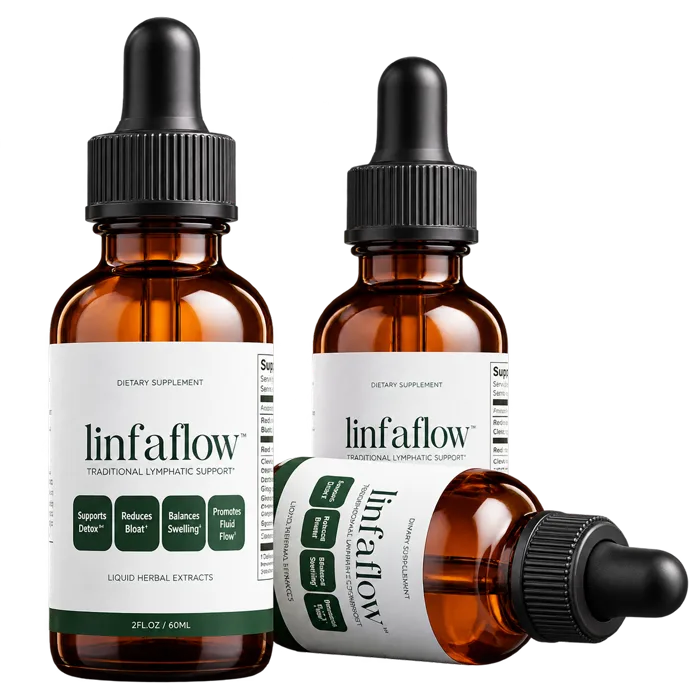
Linfaflow directly addresses the mild, everyday lymphatic and venous sluggishness that causes late-day foot swelling, offering gentle fluid balance support alongside lifestyle changes.
- Buy 3, Get 3 Free — Lowest Price Ever$19.99/bottle
- Buy 2, Get 2 Free — Most Popular$29.99/bottle
- Buy 1, Get 1 Free$34.75/bottle
We may earn a commission at no extra cost to you.
Tracking Your Progress Over Time
Managing fluid retention is rarely a single-day fix. It requires building reliable habits that support your vascular and lymphatic pathways continuously. If you introduce compression wear, evening elevation, and a targeted botanical formula like Linfaflow, monitor your legs for two to three weeks.
Take note of whether your shoes feel more comfortable at 6:00 PM, whether the indentations left by your socks are shallower, and whether your legs feel lighter when walking up stairs. Small, consistent improvements in these markers indicate that your body's fluid balance is moving in the right direction.