 Wellness Review Labs
 By
By 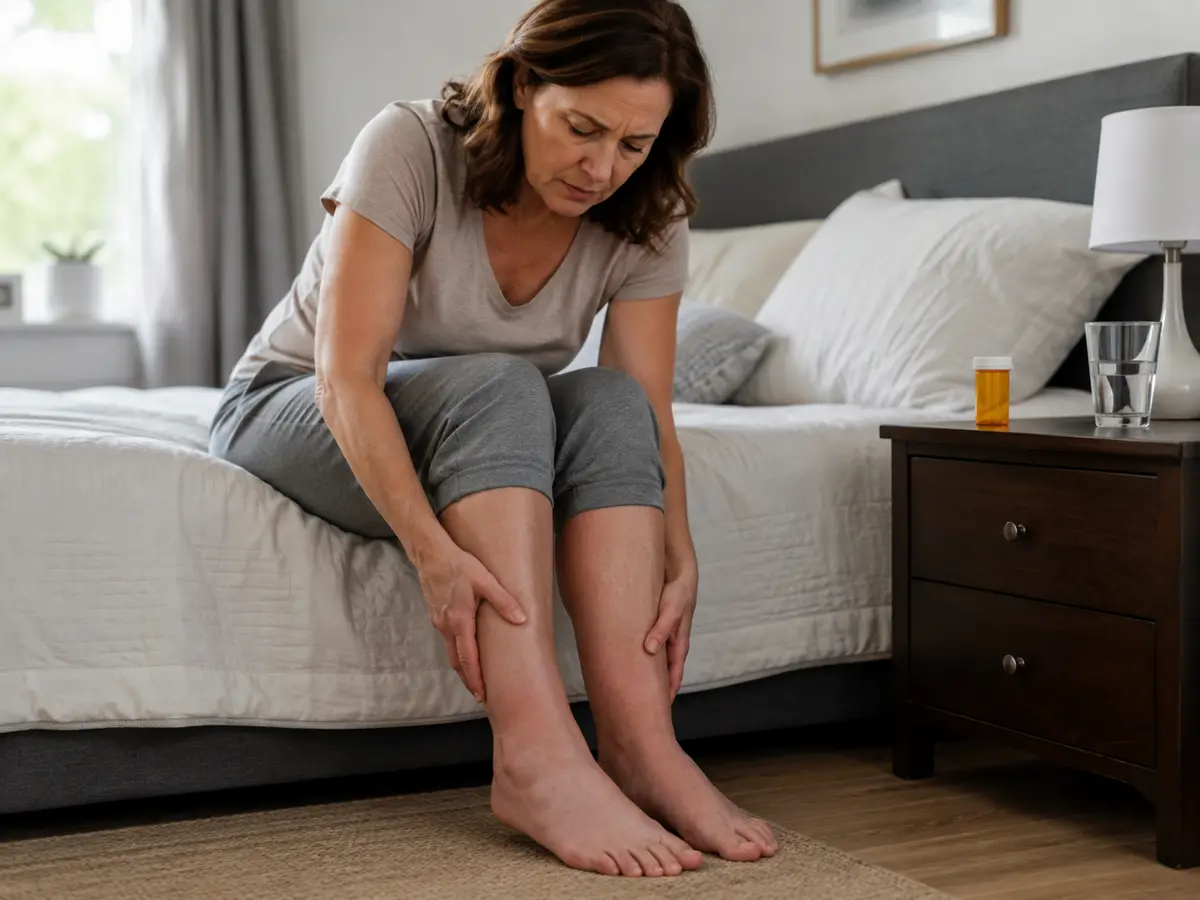
For many of us, ankle swelling creeps up slowly. You might first notice that your favorite shoes feel unusually tight by late afternoon, or that the skin around your ankles looks shiny and feels stretched. Understanding what constitutes a "normal" ankle versus a swollen one can help you decide whether your body simply needs a quick rest or if it is time to look a little closer at your circulatory and lymphatic health.
The Visual Difference: How to Identify Swollen Ankles
To the untrained eye, mild swelling can be hard to spot initially. However, comparing the physical characteristics of normal ankles against swollen ankles makes the difference quite clear.
Normal Ankles: In a healthy, normal state, the ankle joint has visible, distinct anatomical landmarks. You should easily see the bony protrusions on both the inside and outside of the ankle (known as the malleoli). The Achilles tendon at the back of the heel should look sharp and defined, and the skin should feel pliable. If you press your finger firmly into the skin over the bone, the skin should bounce back immediately without leaving any lasting mark.
Swollen Ankles: When fluid collects in the tissues surrounding the joint (a condition known medically as peripheral edema), these bony landmarks begin to disappear. The ankle loses its "hourglass" shape and takes on a more cylindrical, log-like appearance. The skin may look stretched, tight, or slightly shiny. If you press your thumb into the swollen area for about five seconds and it leaves an indentation or "pit" that takes several seconds to disappear, you are experiencing what doctors call pitting edema.
This fluid buildup is not just an aesthetic concern. It often comes with a physical sensation of heaviness, stiffness when flexing the foot, or a dull, throbbing ache that worsens as the day goes on.
Why Fluid Pools: The Mechanics of Gravity and Circulation
To understand why ankles are so prone to swelling, we have to look at how blood and fluid travel through the body. Your heart is an incredibly efficient pump that sends oxygen-rich blood down to your toes. However, getting that fluid back up from your feet to your heart is a much harder task because it requires working directly against gravity.
The body relies on two primary systems to keep fluid moving upward:
- The Veins: Your leg veins contain tiny, one-way valves designed to prevent blood from flowing backward. When you walk, your calf muscles contract, acting as a natural pump that squeezes the veins and pushes blood upward.
- The Lymphatic System: This is your body's drainage network. It collects excess fluid (lymph) that leaks out of blood vessels into surrounding tissues and returns it to the bloodstream. Unlike the circulatory system, the lymphatic system does not have a central pump like the heart; it relies entirely on muscle movement and deep breathing to keep fluid flowing.
If you sit or stand in one place for hours, this muscle-pump action stops working. Without muscle contractions to push fluid upward, gravity wins, and fluid slowly leaks out of the tiny capillaries and pools in the loose tissues of your ankles and feet.
Everyday Causes of Temporary Ankle Swelling
Not all ankle swelling is a sign of a medical emergency. In fact, most everyday swelling is temporary and linked to benign lifestyle factors. As we age, our blood vessels naturally lose some of their elasticity, making us more susceptible to these everyday triggers:
- Prolonged Inactivity: Sitting at a desk, taking a long car ride, or spending hours on a flight can cause fluid to accumulate rapidly in the lower legs.
- High Sodium Intake: Consuming processed foods, restaurant meals, or salty snacks causes your body to hold onto extra water to maintain a healthy cellular balance.
- Warm Weather: When it is hot outside, your blood vessels naturally dilate (widen) to help cool your body down. This dilation allows more fluid to escape into the surrounding tissues, especially in the lower extremities.
- Hormonal Fluctuations: Changes in hormone levels can cause the body to retain more water than usual, which often manifests as puffiness in the hands and ankles.
Free, Simple Ways to Reduce Swelling at Home
If your swelling is mild and related to lifestyle habits, you do not need expensive treatments to find relief. There are several highly effective, free strategies you can implement right now to help your body clear the pooled fluid:
1. Elevate Your Legs: This is the quickest way to assist your circulatory system. Lie down on a sofa or bed and prop your feet up on a stack of pillows so they are positioned above the level of your heart. Do this for 15 to 20 minutes, three or four times a day. Gravity will help drain the accumulated fluid back into your central circulation.
2. Practice "Ankle Pumps": If you have to sit for long periods, you can manually activate your calf pump. Point your toes straight out away from you, then flex them back up toward your shins. Repeat this motion 20 to 30 times every hour. You can also trace circles with your big toes to encourage movement in the joint.
3. Drink More Water: It sounds counterintuitive, but when you do not drink enough water, your body holds onto the fluid it already has to prevent dehydration. Staying well-hydrated helps flush excess sodium and waste products from your system, reducing overall water retention.
4. Reduce Salt Intake: Try seasoning your food with fresh herbs, garlic, citrus, or spices instead of table salt. Reducing your daily sodium intake can make a noticeable difference in ankle puffiness within just a few days.
Simply elevating my feet on two pillows every evening while watching the news completely changed how my legs felt by bedtime. The heaviness simply vanished.— A common experience shared by individuals managing mild, evening fluid retention
Supporting Your Fluid Balance Naturally
For some people, lifestyle adjustments provide some relief, but their legs still feel heavy and tired at the end of the day. This is where targeted nutritional support can be a helpful addition to your daily routine.
When looking to support healthy fluid circulation, plant-based botanicals have been utilized for generations. Certain herbs contain natural compounds that help support the structural integrity of blood vessels and promote healthy lymphatic drainage.
This is the principle behind Linfaflow, a plant-based liquid supplement designed to support the body's natural lymphatic flow and fluid balance. Formulated with traditional botanicals, Linfaflow provides a gentle, systemic way to support your body's natural elimination pathways.
What Linfaflow Can (and Cannot) Do
At Wellness Review Labs, we believe in complete transparency. No supplement is a magic cure, and it is important to have realistic expectations about what Linfaflow can achieve.
What it is designed to do: Linfaflow is formulated to help support healthy circulation and promote natural lymphatic drainage. By supporting the body's natural waste-removal systems, it may help reduce the occasional heaviness and mild swelling associated with prolonged sitting, standing, or warm weather. Because it comes in liquid drop form, it is easily absorbed and simple to add to your daily water intake.
What it cannot do: Linfaflow is not a treatment or cure for chronic venous insufficiency, deep vein thrombosis (DVT), lymphedema, or swelling caused by underlying kidney, liver, or heart disease. It cannot repair damaged vein valves or replace medical therapies prescribed by a doctor. It should be viewed as a supportive, wellness-focused addition to a healthy lifestyle, not a medical intervention.
Linfaflow is available starting at $19.99 per bottle, making it an accessible option for those looking to support their circulation. To ensure you can try it risk-free, it comes backed by a 90-day money-back guarantee, allowing you ample time to see how your body responds to the botanical support.

Linfaflow offers a gentle, plant-based way to support the body's natural lymphatic drainage and fluid balance for those experiencing occasional ankle swelling and lower-leg heaviness.
- Buy 3, Get 3 Free — Lowest Price Ever$19.99/bottle
- Buy 2, Get 2 Free — Most Popular$29.99/bottle
- Buy 1, Get 1 Free$34.75/bottle
We may earn a commission at no extra cost to you.